Don't Overlook Stem Seal Leakage in Control Valves
Rick Ferdon || Valin Corporation
Stem seal leakage in control valves is a problem that often flies under the radar, but it shouldn’t. When specifying a control valve, we usually follow a familiar decision-making process: evaluate materials, capacity requirements, and process conditions. But the reality is, not all process streams are created equal.
Some process fluids don’t stay neatly within the piping system. When molecules can permeate diaphragms, thin foils, or seals, it’s time to take a closer look. Even common liquids can present sealing challenges, especially when elevated temperatures are involved. Take heat transfer oil, for example. It’s notorious for leaking through seals, packing, and threaded connections. Aside from the mess, leaks can introduce serious safety concerns if the fluid is flammable or hazardous.
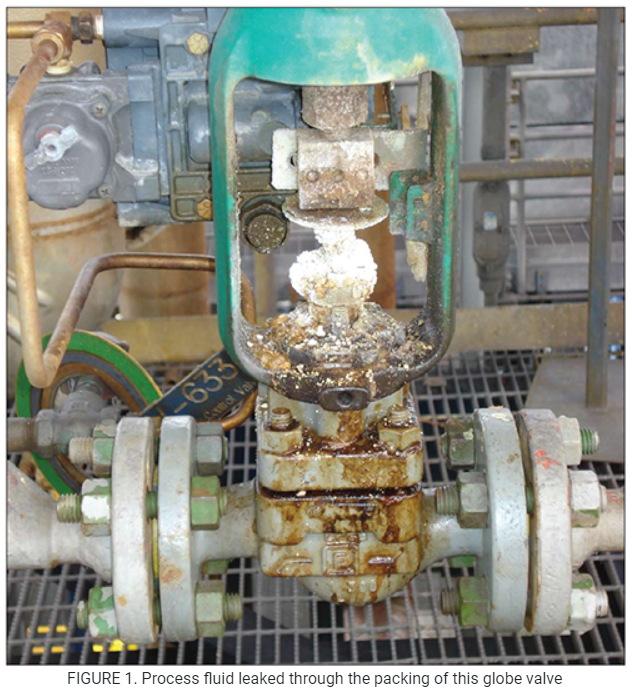
In these situations, traditional globe valves often fall short in containing the process. This issue is especially common in chemical plants and petroleum refineries. While bellows-sealed globe valves offer a tighter seal, they can be cost-prohibitive.
More and more facility owners are turning to rotary-operated valves instead of rising-stem designs. Why? Because rotary valve stems seal against the same surface every time, which minimizes the impact of external conditions and significantly reduces leakage. Plus, rotary valves are no longer limited to high-flow, moderate pressure-drop applications. Newer designs now handle low flow coefficients, too. This was once exclusive to globe valves.
While globe valves remain important in some severe-service and high-precision applications, many industries now rely more heavily on rotary valve technologies. Rotary options now provide viable, and often superior, solutions for many critical processes.
If you're specifying a valve for a process where leakage could be an issue, don’t go it alone. Reach out to one of our experts, and we’ll help you navigate your options. And for a deeper dive into this topic, check out Valin expert Peter Jessee’s article published last year in Chemical Engineering Magazine.
Partner with Valin for all of your control valve needs. Contact us today at (855) 737-4714 or fill out our online form to learn more.
Parker ViX Replacement Options
Corey Foster || Valin Corporation
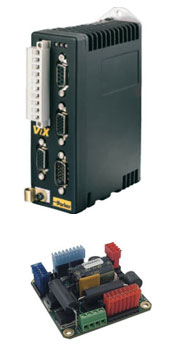 For many applications that are currently using Parker’s old ViX drives and controller/drives, AllMotion’s EZ controller/drives may be a great update path. The ViX series was discontinued in March 2024. While the ViX had some unique features, such as CANopen, an 80VDC input, and brake output, most applications didn’t need them, which makes AllMotion’s smaller products probable options. The ViX also had a little bit higher motor current available and more I/O.
Both series have servo and stepper options with similar programming architecture options making the AllMotion products easily adaptable to the existing ViX applications. A great place to start for the servos is AllMotion’s EZSV17WV. For the steppers, AllMotion’s EZHR23ENHC is a good start. Both can be used as just drives as well.
The ViX part numbers that were discontinued included controller/drives and drives in both the servo and stepper varieties.
| Stepper | Servo (Standard Resolution) | Servo (High Resolution) |
Controller/Drive | VIX250IM-DRIVE VIX500IM-DRIVE | VIX250IE-DRIVE VIX500IE-DRIVE | VIX250IH-DRIVE VIX500IH-DRIVE |
Drive | Controller/drives can be used as drives. | VIX250AE-DRIVE VIX500AE-DRIVE | VIX250AH-DRIVE VIX500AH-DRIVE |
AllMotion |
Comparison of the stepper specifications between them…
ViX(250/500)IM | ||
Length (inches) | 5.71 | 2.25 |
Width (inches) | 1.65 | 2.25 |
Height (inches) | 3.35 | 1 |
Motor | Stepper | Stepper |
Voltage | 24-80VDC | 15-40VDC |
Current (RMS) | 2.8 / 15.6 | 5 |
Step Resolution | Up to 51,200 Step/rev | Up to 51,200 Step/rev |
Communication | RS232 / RS485 / CANopen | RS485 / RS232 / USB |
Feedback | Encoder Input =< 400 KHz | Encoder Input =< 4 MHz |
Digtial Inputs | 5 | Up to 4 configurable |
Digital Outputs | 3 | 2 relay drivers |
Analog In | 12 bit +/-10V Control signal | Configurable |
Analog Out | 10-bit resolution |
|
Controller or Step/Dir | Controller or Step/Dir | |
PC Interface | EasiV (up to WinXP) | EZ Commander (Any) |
Programming | ASCII command strings More capable | ASCII command strings |
Brake Output | 2A dedicated | 2A configurable |
Daisy Chainable | Yes | Yes |
Anti-Resonance | Yes | No |
Encoder Output | Yes | No |
Comparison of the servo specifications between them…
ViX(250/500)(I/A)(E/H) | EZSV17WV (higher-power optional) | |
Length (inches) | 5.71 | 2.25 |
Width (inches) | 1.65 | 2.25 |
Height (inches) | 3.35 | 1 |
Motor | Servo | Servo |
Voltage | 24-80VDC | 20-40VDC |
Current (Cont) | 2.5 / 5.0 |
|
Current (Peak) | 7.5 / 15 | 1.4 |
Communication | RS232 / RS485 / CANopen | RS485 / RS232 / USB |
Feedback | Encoder Input =< 400 KHz / 2.5 MHz | Encoder Input =< 4 MHz |
Digtial Inputs | 5 | Up to 4 configurable |
Digital Outputs | 3 | 2 relay drivers |
Analog In | 12 bit +/-10V Control signal | Configurable |
Analog Out | 10-bit resolution |
|
Controller or Step/Dir | Controller or Step/Dir | |
PC Interface | EasiV (up to WinXP) | EZ Commander (Any) |
Programming | ASCII command strings More capable | ASCII command strings |
Brake Output | 2A dedicated | No |
Daisy Chainable | Yes | Yes |
Encoder Output | Yes | No |
Comparison of some of the basic commands…
ViX | EZ | ||
1GH | Homing Routine | /1Z###R | Homing Routine up to ### steps |
1V## | Set Velocity | /1V##R | Set Velocity |
1A## | Set Acceleration | /1L##R | Set Acceleration |
1MA | Absolute Positioning | /1A##R | Absolute position move |
1D## | Set Target Distance | /1D##R | Relative position move |
1G | Execute Move |
|
|
1S | Stop | /1n0$ | Halt |
EXAMPLE 1MA 1V100 1A10 1D1000 1G | Can be on one line with spaces or separate lines. | EXAMPLE /1L10V100A1000R | Execute Absolute Move to 1000 with a speed of 100 and an acceleration of 10 |
Download Parker ViX Series Servo & Stepper Drive/Controllers Datasheet
Need another option? Ask a Motion Control Engineer