Z-Focus Axis Actuator Achieves Unmatched Precision and Stability
Precision and stability are no longer just desirable in many high-tech applications; they’re essential. Whether you’re in life sciences, semiconductor, metrology, or any field where dynamic focusing and ultra-fast settling times are critical, the ability to control positioning down to the nanometer level can dramatically improve your results. Enter the Parker ZFA Series: a game-changing solution that redefines what's possible in precision linear stages with advanced motion control systems.
The Value of Precision
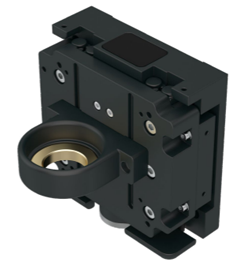 For machinery and instrument builders, achieving nanometer-level stability is a game-changer. The Parker ZFA Series, when used with an advanced motion control system, delivers unprecedented control, ensuring that every movement is precise, every adjustment is exact, and every operation is reliable. In industries like digital pathology and Next-Generation Sequencing, where image quality can make or break an analysis, this level of precision transforms workflows and outcomes.
The Parker ZFA Series doesn’t just enhance image quality; it accelerates processes. By combining ultra-low settling times with rapid step-and-settle capabilities, the ZFA allows systems to move faster and more accurately. The result? Higher throughput, reduced downtime, and increased efficiency—all critical factors in a competitive market where every second counts.
Learn more: ZFA Product Information
Shop now: ZFA Pricing and Availability
Check out our blog: Z Focusing Tips
Selecting the right controller solution
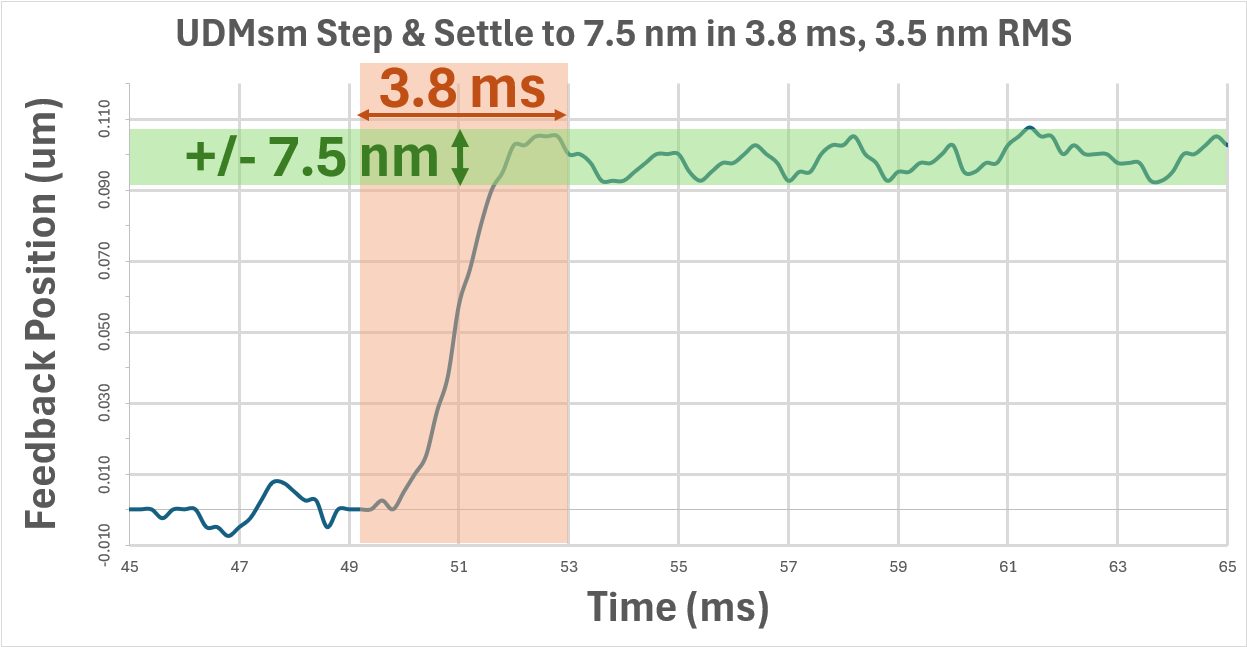
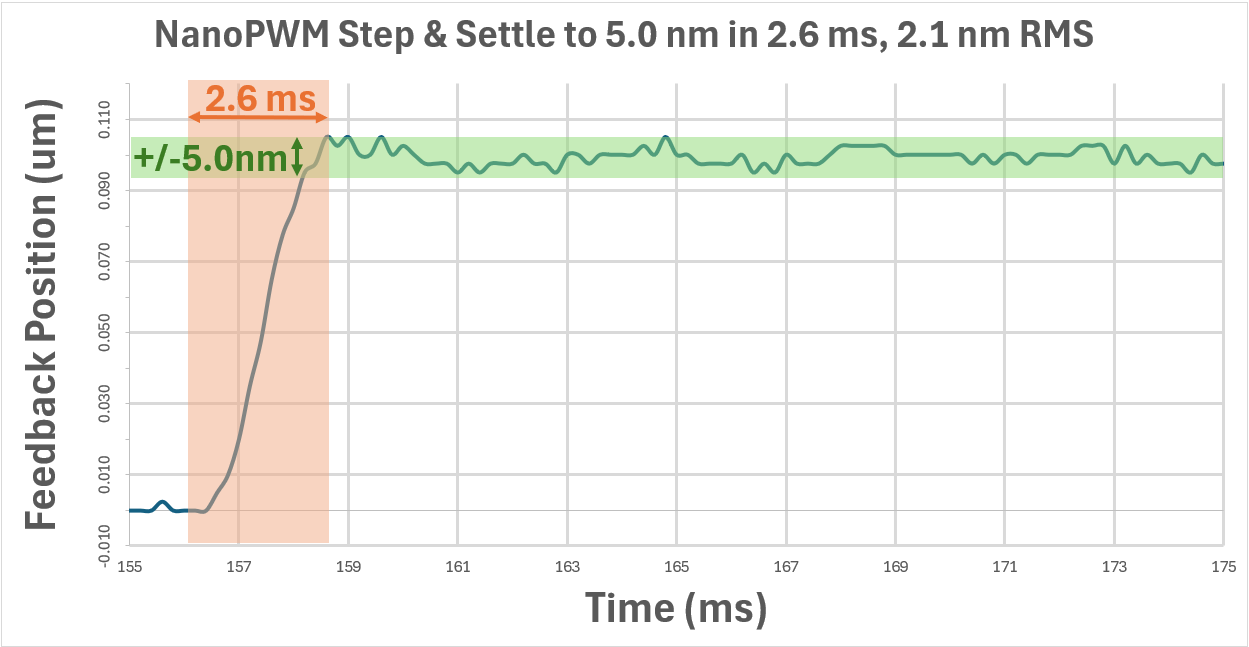
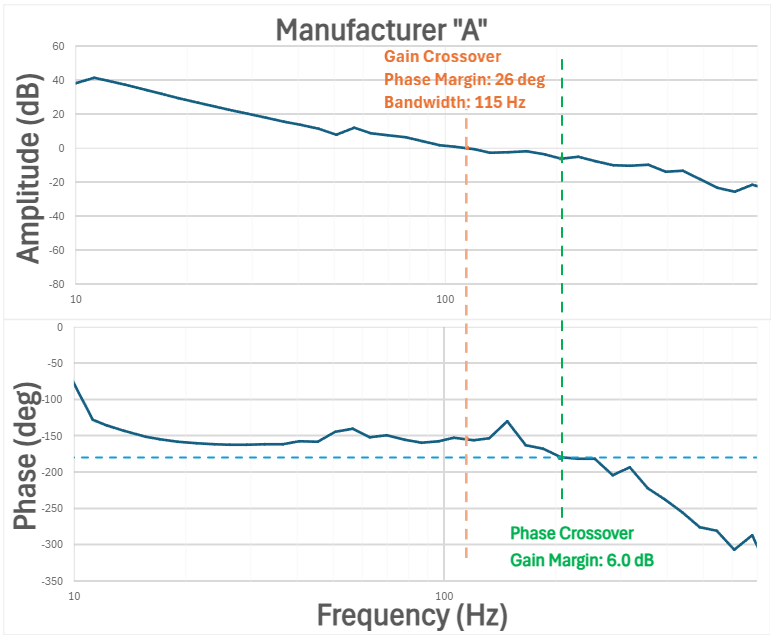
Mechanical performance isn’t just about the mechanics. To hit ultra-high precision and stability, choosing the right electronics to control the mechanics becomes critical. Consider the performance differences between these controller & drive solutions with the same ZFA actuator.
| Units | Manufacturer | ACS ECMsm | ACS NanoPWM | Improvement |
Standstill Stability | nm | +/- 10 | +/- 7.5 | +/- 5 | 50% |
100nm Step | ms | 9.8 | 3.8 | 2.6 | 73% |
100nm Settle | nm | +/- 7.5 | +/- 7.5 | +/- 5 | 33% |
Bandwidth | Hz | 115 | 249 | 250 | 117% |
 |  |
|
|
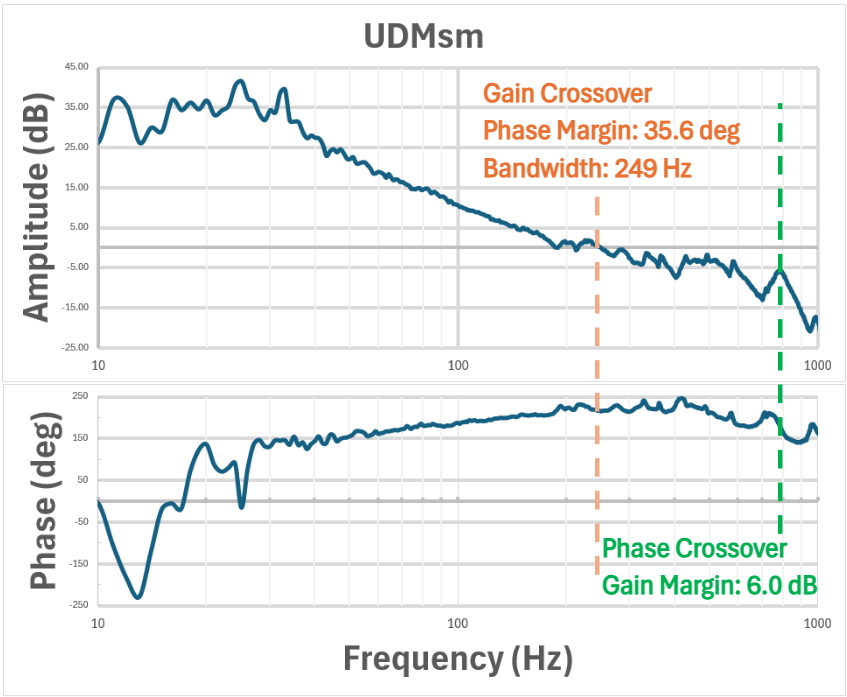
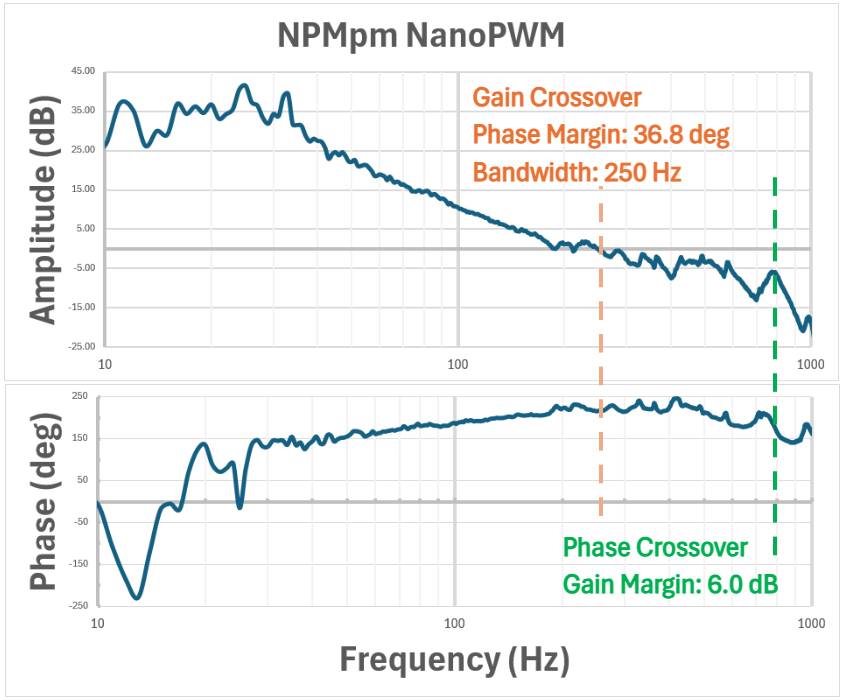
More common servo drives do not perform as well with:
- Longer Settling Times
- More Over-Shoot
- Lower Bandwidths
 |  |
Stability Redefined
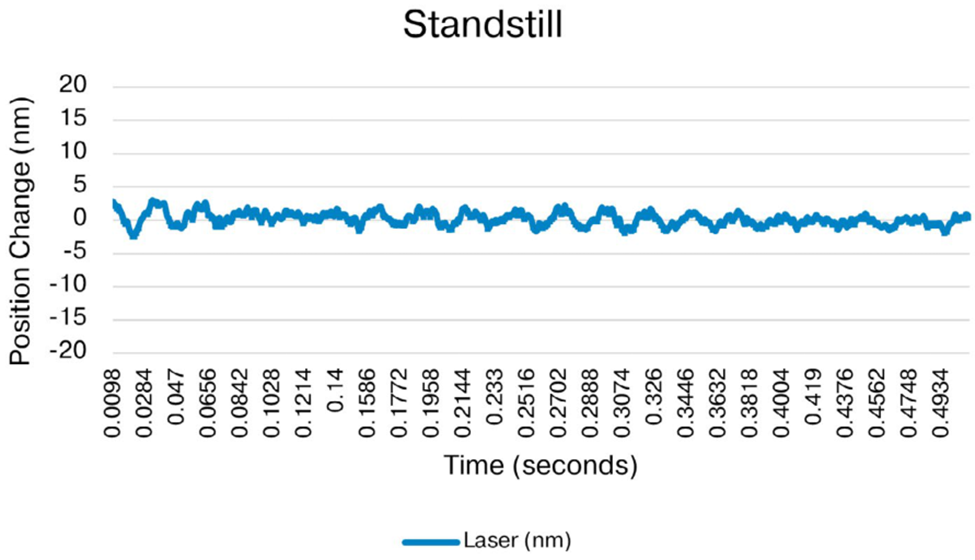
Stability is not just about standing still; it’s about standing still with purpose. The ZFA Series provides industry-leading natural frequencies that ensure stabilities on the nanometer scale, offering unmatched control even during high-speed operations. This means less vibration, more consistent results, and ultimately, a significant reduction in errors and maintenance costs.
For industries that rely on delicate measurements—like semiconductor and metrology—stability directly impacts accuracy. With the ZFA, you can trust that your instruments will maintain their positioning with unparalleled reliability, reducing the need for recalibration and minimizing downtime.
Seamless Integration for Maximum Flexibility
The Parker ZFA Series isn’t just about performance; it’s about integration. Built with the modern machinery builder in mind, the ZFA offers flexible installation options that allow it to fit seamlessly into new or existing instruments. Its compact form factor and configurable features enable you to easily adapt the positioner to your specific needs, enhancing design freedom and reducing engineering time.
Moreover, with integral carriage and base datum features, the ZFA facilitates precise alignment and effortless assembly, whether at the factory or in the field. This adaptability means you can bring cutting-edge precision to your products without complex reengineering, making it easier than ever to upgrade your systems with the latest technology.
Driving Innovation Across Industries
The impact of the Parker ZFA Series goes beyond just one industry—it’s driving innovation across multiple sectors. In life sciences, the ZFA enhances imaging systems, reducing cycle times and improving image resolution, ultimately advancing research and diagnostics. In the semiconductor industry, it provides the stability and accuracy needed for high-stakes measurement tasks, ensuring consistent performance.
But the benefits don’t stop there. The ZFA’s robust design and superior encoder technology make it a versatile solution for any application that demands high precision and reliability. From digital imaging to dynamic inspection systems, the ZFA’s capabilities empower engineers to push the boundaries of what’s possible.
Key Features
- Nanometer-Level Performance: The Parker ZFA Series boasts industry-leading natural frequencies, providing stabilities on the nanometer scale. With single-digit nanometer resolutions, it facilitates rapid step-and-settle moves, enhancing image quality and throughput.
- Compact Design: Featuring a 95 x 90 x 36 mm form factor, the ZFA Series is compact yet robust, fitting seamlessly into a wide range of instruments and machinery setups.
- High Load Capacity: The internal magnetic counterbalance supports up to 1 kg of objective mass, while the optional external counterbalance increases capacity to 2 kg, enabling the use of larger lenses for broader fields of view.
- Advanced Motion Control: Equipped with a high-dynamic voice coil drive and precision cross-roller guidance, the ZFA Series is built for smooth, accurate motion without wear over time when paired with an advanced motion controller.
- Superior Encoder Technology: The ZFA Series includes high-resolution linear encoders with incremental and analog options, achieving exceptional positional accuracy at nanometer-level resolution.
- Ease of Integration: Integral carriage and base datum features facilitate easy alignment and integration into both new and existing instruments. Optional factory-aligned objective brackets streamline the instrument assembly process.
Applications and Industries
 Life Sciences: Enhances imaging system performance, reducing cycle times and improving resolution for applications such as microscopy, digital pathology, and Next-Generation Sequencing.
- Semiconductor Metrology: Delivers the stability and accuracy required for critical measurement tasks, ensuring consistent, reliable results.
- Other Imaging Environments: Ideal for any dynamic imaging setup requiring precise, rapid positioning with minimal maintenance needs.
See more information on the ZFA Series Optomechanical Focusing Nano Positioner
If you have any questions or are just looking for some help, we're happy to discuss your application with you. Reach out to us at (855) 737-4716 or fill out our online form.
Effective Inventory Management During a Turnaround
- Read more about Effective Inventory Management During a Turnaround
- Log in or register to post comments
Autonomous AI Control Service for Edge Controllers
Yokogawa
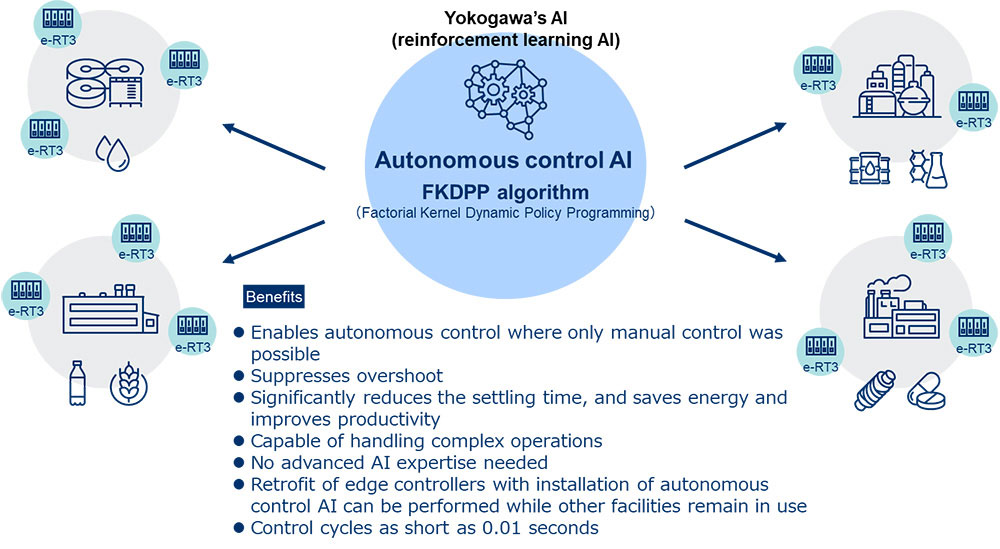
How many of your plant processes still depend on operator tribal knowledge? Any of those operators retiring soon? Yokogawa's e-RT3 Plus utilizes Factorial Kernel Dynamic Policy Programming (FKDPP) for accelerated machine learning. Jointly developed by Yokogawa and the Nara Institute of Science and Technology (NAIST), FKDPP is an autonomous control AI protocol that makes use of reinforcement learning technology. It can control and autonomize areas of plant operations that have been beyond the capabilities of existing control methods and have up to now necessitated manual operation. Yep…that’s right…operator tribal knowledge.
More on FKDPP
FKDPP is a new control technology that is different from PID control and APC. In March 2022, it was announced that Yokogawa and JSR Corporation's elastomer business unit (now owned by ENEOS Materials) had successfully concluded a 35-day field test in which AI was used to autonomously control a facility in a chemical plant that could not be controlled using existing control methods and had necessitated the manual operation of control valves based on the judgements of plant personnel. A world first, this was accomplished despite the presence of factors such as weather conditions that could have significantly disrupted the control state.
With the new service that Yokogawa announced, customers can create AI control models using the FKDPP algorithm and install them on edge controllers. This service has the following features and merits:
FKDPP Features
- Thanks to simplification of the AI model creation process, even non-AI experts can create an autonomous control AI model and install it on an e-RT3 edge controller.
- Retrofit of edge controllers with the installation of the autonomous control AI can be performed while other facilities remain in use.
- Supports control cycles as short as 0.01 seconds and is optimal for device control applications that require a quick response.
FKDPP Merits
Enables autonomous control where only manual control was possible
By applying autonomous control AI in areas that are beyond the capabilities of PID control and APC, both autonomy and optimal control can be achieved. It enables stable control that is less susceptible to external disturbances and increases productivity.
Suppresses overshoot
Although this will vary depending on the control targets, FKDPP suppresses overshoot. The reduction of overshoot (a condition where a set value is exceeded) is expected to extend, for example, the lifetime of furnaces and other heating facilities by reducing unnecessary overheating.
Significantly reduces settling time
FKDPP significantly reduces the settling time compared with PID control, saving energy and improving productivity.
Ability to achieve the right balance between conflicting requirements
Although this will depend on the control targets, FKDPP is able to resolve conflicting requirements and, for example, achieve the right balance between the need to reduce energy use while maintaining product quality.
Yokogawa put FKDPP into practical use by utilizing the company's know-how regarding plant operation and control, and successfully autonomized manual operations of a distillation column during a field test at a chemical plant.
Video: Automation to Autonomy - Industrial AI Platform e-RT3 Plus Controller
Case Study: How Yokogawa Took a Plant from Semi-Automated to Autonomous
Does this sound like a challenge on your plant’s horizon? We can help. Reach out by filling out the form below.
Understanding the Importance of UL 508A Certification for Industrial Control Panels
Jason Gaines || Valin Corporation
How can you be sure that a control panel you are purchasing from a builder meets the quality standard you need? After all, it needs to be built both correctly but more importantly, safely. As the need for companies to be in compliance continues to grow due to the evolution of industrial automation, so does the need for high quality control panels. The industry’s answer to this need is the UL (Underwriters Laboratories) 508A Industrial Control Panel Shop Program.
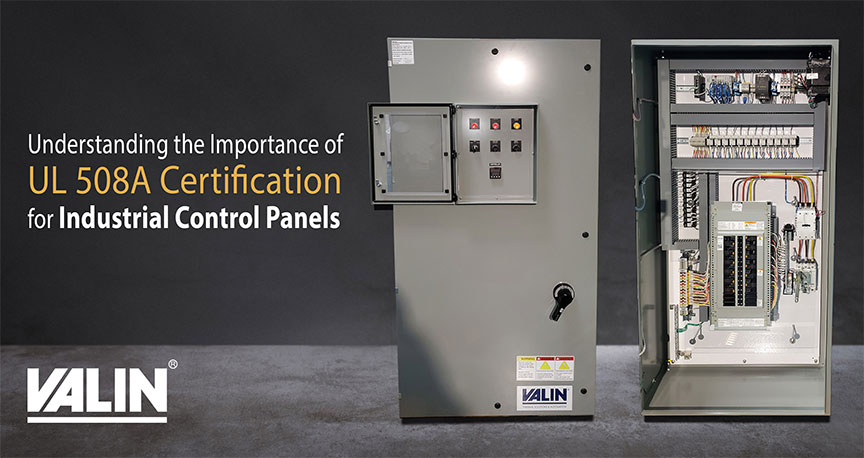
Designed to improve the safety of the control panels being built along with their proper installation, the standard also applies to operator stations and motor controllers.
According to UL, its Industrial Control Panel Program covers multiple requirements such as:
- Proper component usage
- Enclosure environmental ratings
- Wiring and motor protection
- Safety markings
- Conformance to the National Electric Code and Canadian Electrical Code
The UL 508A Standard also lists components and how they should be used, however there are exceptions that accompany the use of some components. One exception concerns the location of the component to ensure they do not operate in a hazardous location such as:
- An explosion-proof enclosure marked for Class I hazardous locations
- A dust-ignition-proof enclosure marked for Class II hazardous locations
- A barrier or other equipment that provides intrinsically safe input/output connections for use in Class I, II and III hazardous locations.
It’s important to be aware of this standard as it does exist for a good reason, to ensure the safe, proper building of these control panels. As usage continues to grow, so does the risk without a standard.
I broke down the UL 508A standard more in depth last year in Processing Magazine. I encourage you to take a look if you’d like to read more.
Click on the following link to learn more about Valin's UL 508A Control Panels.
To speak to one of our control panel experts call (855) 737-4718 or fill out our online form and one of our technical specialists will get back to you.