Unlocking the Power of Modular Automation with WAGO’s Module Type Package (MTP)
Corey Foster || Valin Corporation
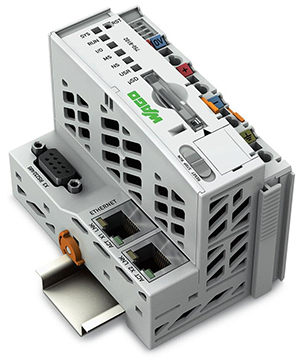 Modular systems have become essential to allow for quick expansions, reductions, and changes in manufacturing and process engineering. WAGO’s Module Type Package (MTP) is at the forefront of this revolution, offering a seamless way to integrate and optimize modular automation solutions. Whether in shipbuilding, pharmaceuticals, or any other industry, MTP ensures rapid, reliable, and efficient system deployment and management.
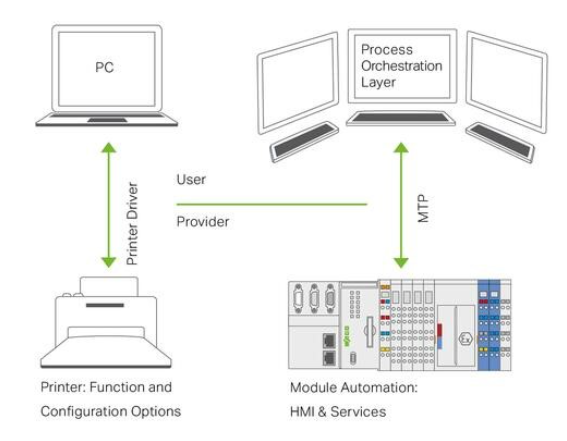
Similar to how a printer driver can connect printers from any manufacturer to a computer, WAGO’s MTP can connect the systems of different manufacturers to a central computer to form complex systems that do not have to worry about the compatibility of their respective interfaces. In the process, different modules will be created that can be swapped out or reused, allowing for quick and easy changes to the system structure.
Key Features of WAGO’s Module Type Package (MTP)
- Standardized Interface: Ensures compatibility and integration across different manufacturers and technologies.
- Plug & Produce: Simplifies the adaptation and expansion of existing systems with minimal engineering effort.
- Dynamic Integration: Facilitates the rapid creation and modification of systems using reusable modules.
- Comprehensive Control: Includes descriptions of data objects, control images, and future service information.
Benefits of Implementing MTP
- Efficiency and Flexibility: Modules can be quickly integrated or swapped, reducing downtime and enhancing productivity.
- Cost-Effective: Minimizes engineering costs through reusable modules and standardized integration processes.
- Enhanced Security: Incorporates advanced security measures, ensuring safe and reliable operation.
- Future-Proof Technology: Leverages modern communication standards like OPC UA for real-time, manufacturer-independent communication.
Applications of MTP in Modular Automation
- IIoT and Smart Factories: Enables intelligent integration and management of various Industrial Internet of Things (IIoT) devices.
- Pharmaceutical Manufacturing: Facilitates the production of highly specialized products in small quantities but can quickly and easily be ramped up for mass production.
- Shipbuilding: Ensures efficient integration of modular systems in complex shipbuilding projects.
WAGO’s Module Type Package (MTP) is transforming the landscape of modular automation, making it easier than ever to create, adapt, and optimize industrial systems. By standardizing interfaces and providing a robust framework for integration, MTP empowers industries to achieve unparalleled efficiency, flexibility, and security. Embrace the future of automation with WAGO’s MTP and unlock the full potential of your modular systems.
Compatible products:
Contact us at (855) 737-4716 to learn more, or fill out our online form.
Mark Efficiently with the WAGO Smart Printer
Corey Foster || Valin Corporation
Download Free Printer Promo Flyer
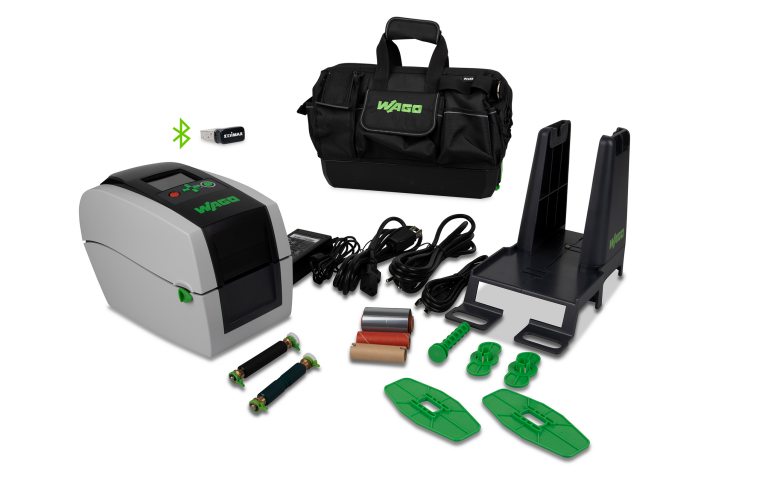
Are you looking to streamline your marking process while saving both time and money? Meet the WAGO Smart Printer, the industry’s most versatile and economical printing solution. This powerhouse device is designed to handle all your marking needs with ease and efficiency.
Why Choose the WAGO Smart Printer?
Versatile Marking Capabilities
The WAGO Smart Printer isn't just another printer; it’s your all-in-one marking solution. It can seamlessly switch between marking terminal blocks, relays, power supplies, and PLCs, to labeling control cabinet type plates, push-buttons, wire markers, and more. This versatility ensures you have one reliable tool for all your marking needs, reducing the hassle of managing multiple devices.
Smart Designer Integration
Take advantage of WAGO’s free online configuration and ordering tool, Smart Designer. With full 3D capabilities, you can create and save custom assemblies complete with all accessories and markings. Export your designs into all standard CAD formats, ensuring a smooth transition from planning to implementation.
Cost-Effective Solution
The WAGO Smart Printer is the industry’s most affordable printing solution, significantly lowering material costs and reducing marking time. Minimal maintenance means you can focus more on your projects and less on upkeep.
Comprehensive Marking Options
 Terminal Block Marking
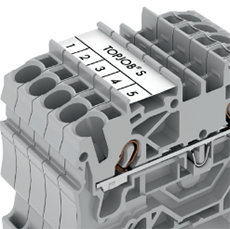
WAGO terminal blocks can be labeled using two exclusive methods: the continuous marker strip for fast, multi-line marking and the WMB inline markers for single marking tags. Fit up to twelve characters of text per terminal block, making identification clear and efficient.
Cable and Conductor Marking
Choose from a variety of marking options including sleeves, self-laminating labels, thread-on wire markers, and heat shrink tubing. These options cater to different wire sizes, providing flexibility and ensuring clear labeling for all your cabling needs.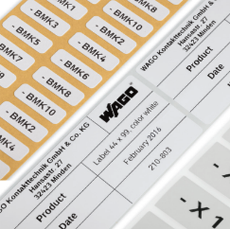 Device Marking
The WAGO Smart Printer offers a broad selection of label types for the entire cabinet, including push-button markers and type plates. Available in various colors and sizes, these labels help maintain a clean, organized, and professional look for your control cabinets.
The Power of Smart Script
Efficient Software Integration
WAGO’s Smart Script marking software complements the Smart Printer perfectly, offering an efficient, cost-effective solution for all your marking needs. It allows you to generate all marking data directly, with seamless integration to the Smart Designer configurator, EPLAN P8, Microsoft Excel, and CSV.
Customization and Ease of Use
With Smart Script, you can manage multiple printers simultaneously, customize print settings based on the material used, and ensure optimal management of your marking projects. The intuitive workflow and modern design make it easy to create and print custom marking solutions.
The Benefits for You
- Modern Design and Intuitive Workflow: Fast and easy to use with integrated printer drivers and settings.
- Large Selection of Marking Media: Tailored templates for use with WAGO’s thermal transfer Smart Printer.
- Optimized Data Interfaces: Seamlessly import data from CAE systems like EPLAN, WSCAD, and ZUKEN, or via Excel.
- Comprehensive Management: Smart Script enables easy project management, mirroring project structures from Explorer, and ensuring quick project discoverability.
Conclusion
The WAGO Smart Printer is not just a printer; it’s a transformative tool that enhances efficiency, reduces costs, and ensures precise marking for all your control cabinet applications. Visit www.wago.com/smartprinter for the installation package and software, or click here to learn more.
If you have any questions or are just looking for some help, we're happy to discuss your application with you. Reach out to us at (855) 737-4716 or fill out our online form.
How Yokogawa Took a Plant from Semi-Automated to Autonomous
Yokogawa
In 2017 Yokogawa started developing AI for control applications. In 2018 FKDPP (Factorial Kernel Dynamic Policy Programming algorithm) was jointly developed by Yokogawa Electric Corporation and the Nara Institute of Science and Technology (NAIST). FKDPP was run on a simulator of a vinyl acetate manufacturing plant (distillation column, decanter). It was presented at the IEEE International Conference in August 2018 as a reinforcement learning technology that can be applied in plants (the world's first reinforcement learning technology to demonstrate high feasibility for use in plants).
Based on four valves and nine sensor values, FKDPP operated the valves to maximize the volume of products produced and ensured that quality values conformed to standards and safety standard values were within tolerances. Stable and optimized valve operation was achieved in just 30 learning trials.
In 2019 Yokogawa succeeded in an experiment using a control training device - a three tank level control system, via laptop PC. Although the system can be controlled with conventional PID control technology, it was shown that FKDPP can reduce the settling time by 50% to 70% while also preventing over-shoot.
In 2020 Yokogawa showed the potential for controlling an entire plant that was confirmed with a simulator. (Paper presented in April 2020).
The demonstration utilizing e-RT3 Plus (as a PLC) with FKDPP was unveiled in an exhibit at Measurement Exhibition 2020 OSAKA.
The experiment was successful and started practical use of minimized use of electricity and LPG for air conditioning control in semiconductor clean rooms in Komagane plant of Yokogawa, Japan.
In 2022, Yokogawa launches Autonomous Control AI Consultant Service and FKDPP controlled a chemical plant for 35 consecutive days (in a world first).
- Reinforcement learning AI can be safely applied in an actual plant
- Can control operations that have been beyond the capabilities of existing control methods (PID control/APC) and have up to now necessitated the manual operation of control valves based on the judgements of plant personnel.
In 2023 (in a world first), Yokogawa’s Autonomous Control AI (FKDPP) is officially adopted for use at an ENEOS materials chemical plant!
- Over two years of stable operation demonstrates this next-generation control technology can decrease environmental impact, achieve stable quality, and transform operations of control valves based on the judgements of plant personnel.
- Yokogawa’s Autonomous Control AI Algorithm (FKDPP) Takes Highest Honor in Japan Industrial Technology Awards!
In 2024 Yokogawa Launched Autonomous Control AI Service for Use with e-RT3
- Optimizes control to improve productivity and save energy
The purpose of the original field test in 2022 was to demonstrate that reinforcement learning AI (FKDPP: Factorial Kernel Dynamic Policy Programming algorithm) can be applied safely in plants where safety is an absolute necessity and also to demonstrate that reinforcement learning AI can be used to control areas that existing technology cannot automate.
Success in “Controlling" an Actual Plant with AI
Field Test Target Overview
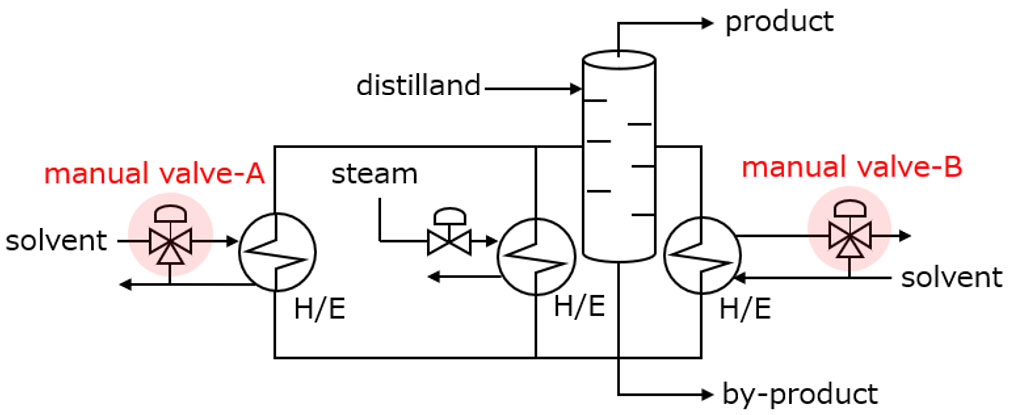
AI directly controls the two heat sources (waste heat utilization) in the revoir section of the distillation column.
Reason for choosing the target : Until now, the target location could not be automated by PID control or APC, so it was manually controlled. (This target was requested by the production department.) Manual control at regular intervals 24 hours a day, 365 days a year is very difficult!
FKDPP operates the MV and controls it directly! No changing of the SV! New control method!
Generate AI control model with a plant simulator
- Plant model generated from design information for the relevant plant
- Reinforcement learning-based AI (FKDPP algorithm) learned and generated a control model
Comprehensively assess AI control model validity and reliability
- Checked with past operating data
- Was it stable?
- What kind of control was performed when problems occurred?
- Checked with real-time data
- Was it stable?
- Was product quality within spec?
- Were veteran operators satisfied with FKDPP control instructions?
Ensure safety, then control a real plant
- Ensured safety with existing interlocks and other safety functions
- Integrated with CENTUM? VP integrated production control system, and incorporated into plant operations
- Ensured safety in operations (planned responses and established system for dealing with AI system malfunctions)
What Did FKDPP Actually Control?
In processes where existing control methods (PID control / APC) could not be applied:
- Separate substances with similar boiling points were controlled
- Maintain liquids in the distillation column at an appropriate level to ensure all products are compliant
- Achieved high quality outputs and increased energy savings while taking into account sudden external disturbances (rain, snow, etc.)
- Operate valves to maximize use of waste heat for heating
Value for Society
Autonomous Control
Areas that previously couldn’t be controlled with PID control and APC were autonomously controlled by reinforcement learning-based AI (the FKDPP algorithm)
Over Two Years
Managed and controlled with CENTUM? VP integrated production control system
Safe Operation and Improved Productivity
Simultaneously achieved safe operation and improved productivity, with stable quality, high yield, and energy saving
Reduced Cost and Time Loss
Only high-quality products were produced, so losses in the form of fuel, labor costs, time, etc. that occur due to production of off-spec products were eliminated
It was proved that next generation control technology using reinforcement learning-based AI ( FKDPP) can greatly contribute to the autonomization of production, ROI maximization, and environmental sustainability.
Conclusion
Until now, there have been many parts of the plant that have not been fully automated.
The next generation control technology using reinforcement learning-based AI ( FKDPP) will autonomize areas that could not be automated with existing control methods while ensuring safety and improving productivity. FKDPP is a disruptive innovation that allows for a different dimension of control, particularly in such areas. This AI technology can be applied in the energy, materials, pharmaceuticals, and many other industries.
The daily monetary value of operations in large-scale plants is in the range of tens of millions of dollars. Autonomous control AI (FKDPP) can greatly contribute to the autonomization of production around the world, ROI maximization, and environmental sustainability, and will have a major economic impact.
In order for our customers to fully understand this value, Yokogawa welcomes customers who are interested in these initiatives globally. We aim to swiftly provide products and solutions that realize industrial autonomy.
Be sure to read our blog: Autonomous AI Control Service for Edge Controllers
Would you like to speak to one of our technical specialists to learn more? Just fill out the form below.
Discover the Future of Automation with Techman AI Cobot
Corey Foster || Valin Corporation
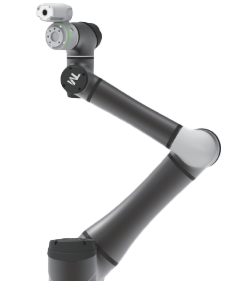 Welcome to the future of manufacturing, where efficiency meets intelligence! At Valin Corporation, we're thrilled to introduce the Techman AI Cobot series—a revolutionary family of collaborative robots that bring the power of AI and vision technology directly to your production floor. If you're a manufacturer looking to enhance productivity, boost quality, and stay ahead of the competition, the Techman AI Cobot is your ultimate solution.
What Makes Techman AI Cobot Stand Out?
1. AI Vision Technology: Unlike traditional robotic arms, Techman AI Cobots are equipped with “AI Vision” technology, giving them the ability to see and understand their environment. This built-in vision system allows the cobots to dynamically adjust to changes, ensuring precision and flexibility in every task. Whether it’s recognizing objects, reading barcodes, or performing quality inspections, these cobots excel where others fall short.
2. Enhanced Productivity: The Techman AI Cobot significantly increases production throughput. By sensing their surroundings and interacting safely with human operators, they create a seamless workflow that enhances overall efficiency. Imagine a robot that can adapt to changes on the fly, and how much that would reduce downtime and maximize your output!
3. Cost-Effective and Flexible: Techman cobots provide a cost-effective automation solution suitable for businesses of all sizes, from small workshops to large manufacturing plants. Their user-friendly, flow-based programming and robust construction ensure they’re easy to use and maintain, offering exceptional value for your investment.
4. Built for Durability: Techman cobots are designed to last. With metal gearing instead of plastic, they stand up to high duty cycles and tough manufacturing environments. Most cobots are still running strong after five years of rigorous use, proving their durability and reliability.
Unique Features of the Techman AI Cobot
Integrated Vision Applications: Techman cobots come with built-in vision applications that include positioning (eye-in-hand, eye-to-hand, upward-looking, conveyor tracking), recognition (barcode/QR code reading, optical character recognition), measurement (distance and angle measurement, object counting), and AI inspection (image classification, object detection, defect detection).
TM Landmark for Precision: The TM Landmark feature allows cobots to calibrate to the work surface rather than the robot’s coordinates. This means when the robot or surrounding objects move, all points are dynamically updated with just one glance, providing unmatched flexibility and accuracy.
Force-Related Features: From deburring and polishing to screw driving and assembly, the Techman AI Cobot’s force-sensing capabilities transform these tasks. By precisely controlling the force applied, the cobots enhance the quality and efficiency of each process, reducing the risk of damage and improving overall precision.
Why Choose Techman AI Cobot?
Smart Manufacturing Made Easy: The Techman AI Cobot is designed to help you achieve smart manufacturing with ease. Its advanced features and user-friendly interface make it simple to deploy and operate, ensuring you get up and running quickly without extensive training or costly setup.
Future-Proof Your Production: As the manufacturing landscape evolves, having a flexible and intelligent automation solution is key to staying competitive. The Techman AI Cobot not only meets today’s demands but is also equipped to handle the challenges of tomorrow, making it a future-proof investment.
Real-Time Quality Control: With the TM Image Manager, you can manage and track quality inspections in real-time. This software monitors inspection progress, records results, and archives images, helping you maintain high standards and reduce after-service costs.
Ready to Transform Your Manufacturing Process?
Join the ranks of forward-thinking manufacturers who have already discovered the benefits of the Techman AI Cobot. At Valin Corporation, we’re here to help you integrate these innovative robots into your production line, providing the support and expertise you need to succeed. Click here to learn more about Techman AI Cobots.
Talk to one of our automation experts today at (855) 737-4716 or fill out our online form to learn more.
How are IAI’s ELECYLINDERS Better than Conventional Pneumatics?
Corey Foster || Valin Corporation
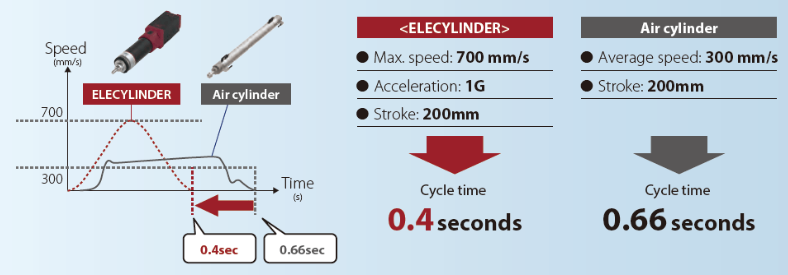
Designed to replace conventional pneumatic cylinders, ELECYLINDERS offer precise control, reduced cycle times, and enhanced reliability. With their direct control of acceleration and velocity, ELECYLINDERS ensure smoother, faster, and more accurate movements that pneumatic cylinders could never match. Whether in manufacturing, assembly, or any other form of automation, IAI’s ELECYLINDERS are the perfect fit for your applications.
IAI’s ELECYLINDERS vs Pneumatics
| Topic of Comparision | Basic Pneumatics | Advanced Pneumatics | IAI’s ELECYLINDERS |
| Motion Control | No control over motion parameters, leading to less precise operations. | Some basic control over motion parameters. | Can directly control the acceleration, velocity, and deceleration. |
| Precision | Position verification only at target positions with no velocity verification, leading to imprecision and inaccuracies. | Position verification along the stroke with velocity verification requiring advanced controls. | Significantly better position verification at 1 kHz and velocity 20 kHz, ensuring proper placement and stable movement. |
| Jerk and Impact | Sharp changes in acceleration (jerk) cause impacts at the start and end of strokes. | Softens jerk and impact, but not erased. | Jerk and impact can be smoothed out and nearly erased because of the direct control of the AVD. |
| Maximum Velocity | Low effective maximum velocity to avoid strong impacts. | Slightly higher maximum velocity due to impact softening. | Highest maximum velocity of 700mm/s with little/no impact at the end of the stroke. |
| Response Time to Start Signal | Slow | Slow | Extremely fast |
| Cycle Time | Longer cycle time due to delayed response time and lower velocities. | Slightly shorter cycle time. | Significantly shorter cycle time because of the quick response and higher velocities. |
| Time Efficiency | Longer cycles and short stoppages reduce the time efficiency of pneumatic cylinders. | Shorter cycles and higher precision mean more cycles can be done with fewer stoppages. | Fastest cycles and highest precision mean unparalleled time efficiency. |
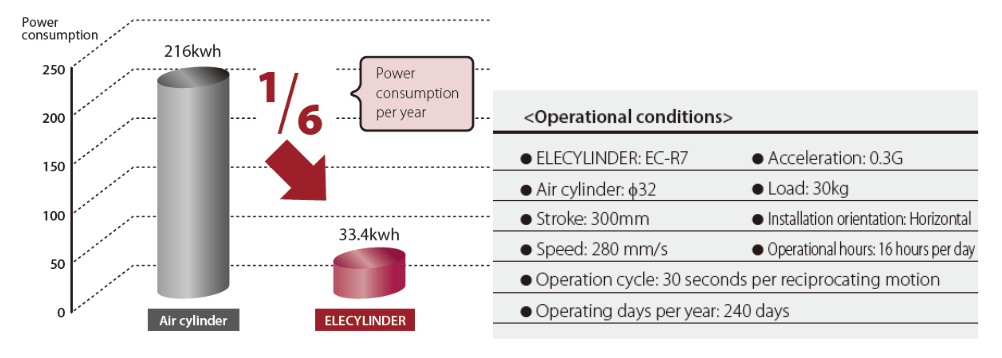
| Energy Efficiency | Constant compression and leakage of air uses considerable amounts of energy. | Constant compression and leakage of air uses considerable amounts of energy. | Energy efficiency improves with operational frequency, reducing energy usage up to 85%. |
| Durability/Life Expectancy | Typically rated at 3,000 miles with no serviceable parts. | Typically rated at 3,000 miles with no serviceable parts. | Life expectancy of up to about 7,500 miles, plus maintenance warnings and easily replaceable parts. |
If you have any questions or are just looking for some help, we're happy to discuss your application with you. Reach out to us at (855) 737-4716 or fill out our online form.
What is the Difference between IAI’s ELECYLINDERS and ROBO Cylinders?
Corey Foster || Valin Corporation
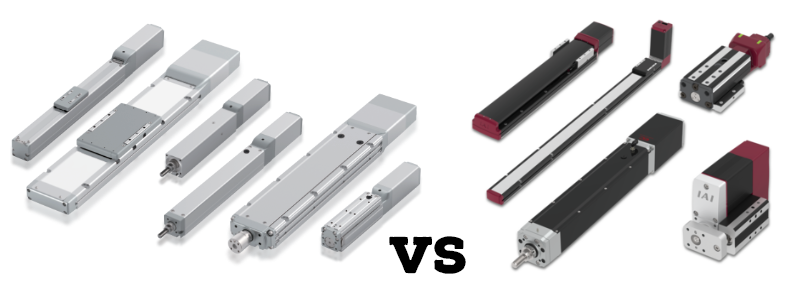
IAI has two lines of products that are meant to replace pneumatics, the ROBO Cylinders and the ELECYLINDERS. This page shows the general differences between the two lines so you can make the best decision for your application.
IAI’s ROBO Cylinder vs ELECYLINDER
| Topic of Comparison | ROBO Cylinder | ELECYLINDER |
| Positioning | Multi-positioning of up to 8 points. | Start and end points only. 3-Position mode optional. |
| Repeatability | +/- 0.01 to 0.02mm | ±.05mm |
| Control | Control over position, velocity, acceleration, deceleration, and torque. | Control over acceleration, velocity, and deceleration. |
| Stroke Length | 50mm to 1000mm | 10mm to 2600mm |
| Max Speed | 2200mm/s | 2000mm/s |
| Linking | Serial I/O for linking up to 16 axes. | Links to 1 axis. |
| Life Expectancy | 5,000km | 10,000km |
| Price | If the costs of the controllers are included, 40% less. 3-position mode is a small adder. |
If you have any questions or are just looking for some help, we're happy to discuss your application with you. Reach out to us at (855) 737-4716 or fill out our online form.