Level Transmitter Technology Options: How to Choose
- Read more about Level Transmitter Technology Options: How to Choose
- Log in or register to post comments
Seamless Transition to Certified Fuel Filtration: Parker's CDFX? Solution for EI 1583 Phase-Out
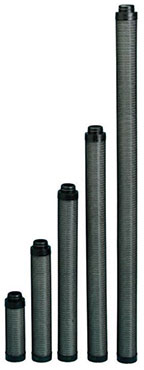 The EI specification for filter monitors has been retracted and is no longer available or applicable to the industry as of December 31, 2020. Phase out of EI 1583 SAP filter monitors has been mandated by the industry regulators. Parker's drop in solution for new and existing monitor vessels, CDFX?. guarantees removal of water and dirt from fuel without requiring any additional sensing equipment. By removing the water rather than simply detecting it, you can ensure that clean dry fuel is delivered every time, avoiding costly downtime, potential flight delays and/or removal of contaminated fuel from your aircraft.
All of Parker's products are fully certified, making switching easy and cost effective.
What to Consider for Phase-Out Solutions (FWS, DDF/EWS or WBF)
- What is the tolerance for risks? Is water removal important at the aircraft wing?
- Dirt defense filters do not remove water.
- Sensors alarm, then what? Procedure? Who makes the “all good” call after an alarm?
- What is the expense of a fueling shutdown? Refueling truck, Hydrant services or Hydrant system?
- How robust is the sensor under adverse conditions? Can it fail prior to annual certification?
- Managing sensor calibrations. Spare certified sensors. Sensor life expectancy.
- FWS can be disarmed, does not protect against water slug, not a drop-in solution!
- Often custom FWS that are larger/heavier vessels that required extensive labor and hot work.
- Capital costs, Equipment installation, Vehicle design limitations, Meter compatibility, Electronics, etc.
- = Costly Downtime…
FWS: Filter Water Separators
DDF/EWS: Dirt Defense and Electronic Sensors
WBF: Water Barrier Filters
Parker Velcon Water Barrier Technology is approved to the EI 1588 Test Specification
- Removal of SAP Testing
- Water Slug Testing
- Emulsified Water Testing
- Solids Testing
- Compatibility Testing
- Structural Testing
Learn more about Parker Velcon’s CDFX? Series SAP Free Water Barrier Filters for Aviation Fuel.
For more information or a detailed discussion about your specific requirements please contact one of Valin's technical specialists at (855) 737-4717 or fill out our online form here and someone will contact you.
Have you Ever Wondered How to Protect Safety Light Curtains in Wet or Harsh Conditions?
James Gaitan || Valin Corporation
 ReeR Safety offers an innovative solution for safeguarding operations in challenging industrial conditions with their watertight enclosures for safety light curtains. These enclosures are specifically designed to protect light curtains in environments that demand high durability and resistance to water, steam, and other harsh elements, ensuring uncompromised safety and performance in industries like food and beverage, pharmaceuticals, and heavy manufacturing.
Features and Benefits:
- IP69K Rated: Designed for EOS2 and EOS4 models, these compact cylindrical enclosures are tested to withstand water pressures up to 80 bar and temperatures up to +80°C.
- ECOLAB? Certified: Constructed with inert, non-toxic materials, these enclosures are specifically designed to withstand rigorous cleaning procedures required in the food and beverage industry.
- WTHF Version: This specialized heated enclosure features a thermostatically controlled heating system, allowing it to operate in temperatures as low as -25°C while retaining its IP69K protection rating.
Talk to one of our experts today at (855) 737-4716, or fill out our online form to learn more.
Have You Ever Wondered How to Safeguard Your Operations Without Compromising Efficiency?
Corey Foster || Valin Corporation
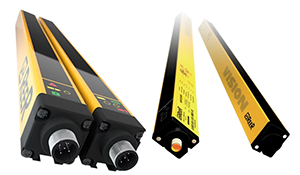 ReeR Safety offers advanced safety light curtains packed with features that set them apart from the competition. Their solutions are designed not only to protect operators but also to enhance operational efficiency and flexibility. With SIL 3 and PL e certifications, ReeR Safety ensures maximum protection for critical applications, while offering innovative features like muting, blanking, and cascading that allow uninterrupted workflow and seamless integration with automated systems.
Why Choose ReeR Safety Light Curtains:
- High Precision Detection: Models offer high resolution for detecting even the smallest objects, ensuring accurate safety in proximity to workers and machines.
- Advanced Functionality: Features like muting, blanking, and cascading enable the system to adapt to dynamic production environments, allowing materials to move freely while maintaining operator safety.
- Rugged and Reliable: With IP67 protection and resistance to harsh environments, ReeR Safety light curtains are built for durability in challenging industrial conditions.
- Ease of Integration: ReeR’s light curtains support network connectivity and diagnostics for real-time monitoring and faster troubleshooting, reducing downtime and boosting productivity.
Learn more about ReeR Safety Light Curtains.
Talk to one of our experts today at (855) 737-4716, or fill out our online form to learn more.
ReeR Safety Light Curtains
Safety Light Curtains Description:
Electronics Matter
Corey Foster || Valin Corporation
Have You Considered How Controllers and Drives Impact Your Actuators' Precision?
When designing high-precision automation systems, engineers often focus on the mechanical specifications of actuators, assuming that the performance listed in the datasheet is what they’ll achieve. While the mechanics are crucial, this narrow view can lead to suboptimal performance. To unlock the true potential of your system, you must look at the bigger picture—how the actuators are mounted, the operating environment, and most importantly, the electronics that control them. Advanced controllers and drives, paired with high-quality motors, are the foundation of a truly optimized system.
It All Starts with the Motor
At the heart of every motion system is the motor. The type of motor, its construction quality, and the materials used are critical determinants of performance. Even within a single motor technology, such as 3-phase servo motors, quality varies drastically. For instance:
- Design: High-quality motors are engineered to minimize inconsistencies, ensuring smoother and more precise operation.
- Materials: The consistency of magnetic materials, copper windings, and even housing materials impacts reliability and precision.
- Manufacturing Processes: Poorly wound motor phases lead to torque ripple, velocity ripple, and less smooth motion—issues that are magnified in ultra-high-precision systems.
Low-quality motors can bottleneck performance, much like putting a 1950s VW Bug engine into a Lamborghini chassis. It may look impressive, but the system’s potential is wasted.
Drives: The Unsung Heroes of Motion Control
A drive bridges the gap between the motor and the controller, dictating how the motor is powered and commutated. High-quality drives don’t just power motors—they enhance their performance. Here’s how:
- Feedback Processing: Drives that handle high-resolution encoders and process feedback at higher frequencies enable more precise motor control.
- Firmware Features: Patented technologies, such as advanced commutation algorithms, can maximize motor efficiency and smoothness.
- Current Control: High-performance drives optimize current delivery, improving torque control and overall system responsiveness.
A low-quality drive may meet basic needs but won’t unlock the full potential of a high-quality motor. Advanced drives effectively amplify the capabilities of the entire system.
Controllers: The Brains of the Operation
Controllers are where the magic happens—they interpret feedback and send commands to the drive. The sophistication of a controller determines how well it can harness the motor and drive’s potential. Modern controllers include:
- Advanced Tuning Algorithms: Sophisticated servo algorithms and tools like frequency-domain tuning surpass traditional PID-based methods, enabling unparalleled system precision.
- Processing Power: Faster processors handle higher-frequency feedback, enabling real-time adjustments and better system stability.
- Firmware Capabilities: Features like ACS’s NanoPWM allow controllers to achieve nanometer-level precision, critical for applications requiring extreme accuracy.
Without a high-performance controller, even the best drives and motors can fall short.
System Architecture: Putting It All Together
The interplay between motors, drives, and controllers defines the architecture of a motion control system. Manufacturers increasingly design intelligent drives that handle critical decisions closer to the motor, reducing latency and improving responsiveness. This decentralized approach mirrors high-frequency trading systems on Wall Street, where proximity to the decision point enhances performance.
For example, drives can often process motor feedback more quickly than controllers, allowing for rapid adjustments that improve motion smoothness. Meanwhile, controllers focus on higher-level tasks, ensuring the entire system operates cohesively.
Don’t Settle for Less
When designing a mechanical system, every building block matters. From motors to drives to controllers, each component contributes to the overall performance. Low-quality elements can sabotage even the finest mechanical designs, leading to wasted potential and underwhelming results.
The lesson is clear: if you want a system that doesn’t just meet specifications but exceeds them, prioritize advanced electronics. High-quality motors paired with sophisticated drives and controllers ensure your system achieves peak performance. With the right architecture and components, you’ll not only unlock the potential of your mechanics but surpass their limitations.
In automation, success lies in seeing the whole picture. Don’t just move—move smarter, faster, and more precisely.
Talk to one of our experts today at (855) 737-4716, or fill out our online form to learn more.