Determining Pressure Drop for Control Valve Sizing
Submitted by Peter Jessee || Valin Corporation
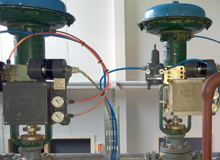
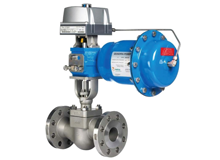
Most people who are familiar with control valves have seen the formula for calculating the valve capacity (Cv) required to pass a given flow rate of water. This seems fairly straightforward until you ask yourself, what is the correct value of differential pressure to use?
Read More
Maintaining an Enclosure’s Integrity
Submitted by Fred Gridley || Valin
Maintaining a consistent internal environment for your enclosures is critical for equipment to function properly. The National Electrical Manufacturers Association (NEMA) has defined standards for specific enclosures designed for the application and environment when correctly installed. Learn more.
Read More
Instrumentation Fittings for Power Plants
Submitted by Greg Neneman || Valin Corporation
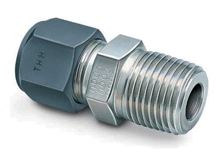
A lot must be reviewed before selecting the right fitting for power plant instrumentation applications. Among the choices are whether to use single- or double-ferrule designs; heat codes, lubrication, and corrosion resistance must also be considered.
Read More
Stop Cavitation from Destroying Your Control Valve Trims
Submitted by Dr. Jon F. Monsen and Dr. Hans D. Baumann
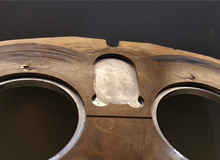
The devastating effects cavitation can have on control valve internals are widely appreciated. In this article, the authors therefore explain the origins of cavitation, provide an easy-to-use method to estimate cavitation sound levels, and conclude with approaches to reduce or even avoid cavitation.
Read More
Instrumentation Fittings — What You Need to Know
Submitted by Greg Neneman || Valin Corporation
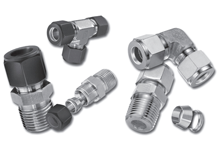
In the world of instrumentation, there are a number of different topics discussed and analyzed. However, one that should not be overlooked is that of instrumentation fittings. Do you know what technologies are available? Do you know the strengths and/or weaknesses? Are there any new trends?
Read More
Control Valve Cavitation and Noise Prevention
Submitted by Kari Kohonen || Valin Corporation
Specifying control valves and engineering a system in which the flow of a particular product is completely optimized for superior performance and yield can be a challenging process. A number of factors must be considered during this practice to avoid process-destroying problems. Learn more.
Read More
Liquid Flashing in a Control Valve Without Choked Flow
Submitted by Jon Monsen, Ph.D., P.E., Valin Corporation
Many engineers may wonder if it is possible to have flashing liquid flow in a control valve even if the flow is not choked. The short answer is yes, but it is not very common. This article provides a more detailed answer to this question.
Read More
Confirm Best Practices for Compressed Air in Refineries
Submitted by Ron Jett || Valin Corporation
Within a refinery, four main utilities are considered essential to operations: electricity, natural gas, water, and compressed air.
Read More
Why Equal Percentage Valves Act Linear
Submitted by Jon Monsen, Ph.D., P.E., Valin Corporation
I was recently asked how the installed flow characteristic of an equal percentage valve in a system that includes a significant amount of pipe or other pressure-consuming elements "magically" becomes a linear, or approximately linear, installed flow characteristic.
Read More
Solving the Burden of Bourdon Tubes
Submitted by Brian Sullivan || Valin Corporation
Fabs and OEMs in the semiconductor industry face a number of difficult challenges today, specifically in the etch and deposition/thin film processes. These incredibly specialized processes require extremely clean gases and vaporized chemical sources.
Read More
Nitrogen Generation in the Metal Industry
Submitted by Patrick Hyland || Valin Corporation
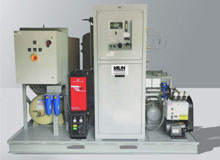
In the past, bulk storage systems have been used to house nitrogen on-site at the manufacturing plants, but this method of storage can result in a significant loss in revenue. So, what is the solution for plant owners? The answer begins with in-house nitrogen generation systems. Learn more.
Read More
iPolymer High Purity PTFE Pressure Regulator
Submitted by iPolymer
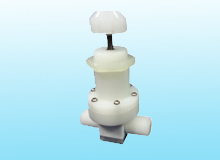
The iPolymer PTFE Pressure Regulator is designed for use with high-purity water systems and aggressive chemical applications to regulate and maintain a constant pressure downstream of the valve and prevent over-pressurization of sensitive equipment.
Read More
Optimizing Today’s Pneumatic Systems
Submitted by Bill Nevills || Valin Corporation
In the last ten years, the design of pneumatic manufacturers' online tools for sizing components has evolved, the fieldbus systems are ever-changing, component designs are constantly improving, and network devices such as the Industrial Internet of Things have reshaped the industry. Learn more.
Read More
Predicting Cavitation Damage in Control Valves
Submitted by Jon Monsen, Ph.D., P.E., Valin Corporation
Liquid choked flow in control valves results in either flashing, or more often, cavitation.
Read More
Controlling Compressor Vibration and Surge
Submitted by Jim Slama || Valin Corporation
Controlling vibration and surge is one of the most critical aspects of keeping centrifugal and reciprocating compressors up and running. If improperly monitored and maintained, these types of compressors can experience frequent functional issues and ultimately shorten their life span.
Read More
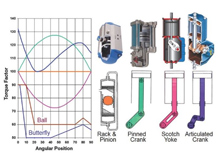
Modern Tools for Sizing Control Valves and Actuators
Submitted by Jon Monsen || Valin Corporation
Valve sizing and proper application of control valves have always gone hand-in-hand. However, the tools available to valve users have changed and improved significantly over time.
Read More
Process Control Building Blocks and Standards
Submitted by Chris Sullivan || Valin Corporation
Despite the demand for standardized communication protocols among manufacturers, both the manufacturers and end users face challenges when it comes to agreeing on a path.
Read More
Retrofitting Customized Valves for Pipeline Monitoring
Submitted by Ray Herrera || Valin Corporation
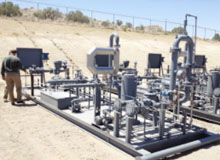
Oil and gas engineers face a problem in accurately and reliably measuring and monitoring the various fluids that are introduced into oil pipelines from well-site pumping stations. A thorough understanding of both the oil separation process and the properties of valves and actuators is required.
Read More
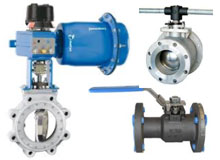
Best Practices: Pipe and Valve Selection for a Cooling System
Submitted by Ray Herrera || Valin Corporation
When selecting the pipes and valves for a cooling system, it is important to understand the options available—and the possible outcomes associated with each selection. Many factors can impact the effectiveness, longevity, and quality of the overall cooling system. Learn more.
Read More
Seeking Precise Pharma Process Control
Submitted by Brian Sullivan
Spectroscopy-based measurement on manufacturing lines yields greater process control.
Read More
United Electric Controls | HART Transmitters with Switching
United Electric Controls has introduced a unique new family of HART capable transmitters that provides programmable switching functionality for industrial process monitoring applications. The One Series 1XTXSW transmitter line is the first to integrate HART 7 compatible 4-20 mA output. Lean more.
Read More
Pop the Cavitation Bubble in Hydraulic Systems
Submitted by Russell Rochambeau, Valin Corp.
Making smart design decisions, particularly in relation to the suction line, can avoid potentially severe cavitation-induced damage to hydraulic pumps.
Read More
Valve-Selection Best Practices
Submitted by Ray Herrera, Valin || Chemengonline.com
Precise combinations of valves and other equipment lead to process success. A biopolymer fermentation process provides an example of proper valve selection.
Read More
Part IV: Keys to Effective Valve Sizing & Selection
Submitted by Jon Monsen Ph.D., PE // Flow Control Network Magazine
This is Part IV in a four-part series based on the contents of the new textbook, "Control Valve Application Technology, Techniques and Considerations for Properly Selecting the Right Control Valve."
Read More